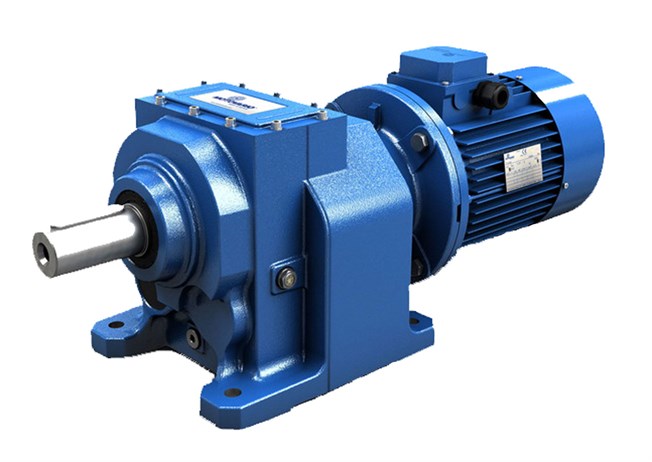
For system integrators, selecting a helical gear motor is never just about choosing a component.
It is about ensuring system reliability, torque accuracy, installation compatibility, and long-term operational stability across the entire industrial project lifecycle.
A wrong gearbox choice can cause vibration, noise, overheating, or even system redesign.
A correct choice, however, makes the whole system run smoothly—quietly and efficiently.
So how do experienced system integrators select the right industrial helical gearbox for demanding projects? Let’s walk through the real decision logic.
![Image]()
Understanding System Integrators’ Real Selection Challenges
Why Helical Gear Motor Selection Is Critical in Industrial Projects
![3d rendering of a blueprint industrial city with detailed objects]()
In industrial projects, gear motors are not standalone products. They are deeply integrated with:
Conveying systems
Mixing and processing equipment
Packaging and automation lines
Lifting and material handling systems
A mismatched geared motor can compromise the entire project schedule and performance.
The Difference Between Integrator Selection and End-User Purchase
![工程师在智能工厂使用物联网数字技术,智能制造数字化流程生产管理技术应用程序系统自动化机器人控制]()
System integrators focus on:
Unlike traders, integrators think in systems, not single products.
Why Helical Gear Motors Are Widely Used in Industrial Systems
Smooth Transmission and High Efficiency
![R系列+变频制动电机]()
Compared with worm gear motors, helical gear transmission offers:
Higher efficiency
Lower energy loss
Smoother torque output
This makes helical geared motors ideal for continuous-duty applications.
High Torque Capacity in Compact Design
A high torque helical gearbox can transmit large torque within a relatively compact size—perfect for space-limited installations.
Long Service Life and Low Noise
Helical gear teeth engage gradually, which:
These are key requirements in modern industrial environments.
Core Product Features of a Reliable Helical Gear Motor
Precision Gear Design and Manufacturing
High-quality helical reduction gear depends on:
Accurate gear cutting
Proper heat treatment
Controlled backlash
This directly affects transmission stability and service life.
Robust Gearbox Housing
![F系列A+B轴带变频电机]()
An industrial helical gearbox must withstand:
Continuous load
Shock load
Harsh environments
A rigid housing ensures gear alignment under real operating conditions.
Flexible Shaft Configurations
![K空心轴灰色]()
System integrators often require:
Having both options simplifies system design.
Choosing the Right Helical Gear Motor Structure
Inline Helical Gear Motor
![R系列+变频电机 (2)]()
An inline helical gear motor offers:
Compact axial layout
High efficiency
Easy alignment
Ideal for conveyors and automation systems.
Parallel Shaft Helical Gear Motor
![F系列A+B轴带变频电机]()
A parallel shaft helical gearbox provides:
Perfect for heavy-duty conveying and processing lines.
Coaxial Helical Gear Motor
A coaxial gear motor integrates motor and gearbox on the same axis, making it:
Space-saving
Easy to install
Widely interchangeable
Comparing Helical Gear Motors with Other Gear Types
Helical Gear Motor vs Worm Gear Motor
| Item | Helical Gear Motor | Worm Gear Motor |
| Efficiency | High | Low |
| Heat | Low | High |
| Backdriving | Possible | Self-locking |
| Lifespan | Long | Shorter |
For energy efficiency and long-term stability, system integrators prefer helical gear reducers.
Helical Gear Motor vs Bevel Gear Motor
A bevel gear motor is suitable for right-angle transmission, but:
Torque, Speed, and Ratio Selection for System Projects
Understanding Load Characteristics
Before selecting a helical speed reducer, integrators must evaluate:
Selecting the Right Gear Ratio
The correct helical reduction gearbox ensures:
Avoiding Oversizing and Undersizing
Oversizing wastes cost and energy.
Undersizing risks failure.
Professional selection balances performance and cost.
Installation Considerations in Industrial Projects
Mounting Position and Space Constraints
System integrators must confirm:
Mounting orientation
Foundation strength
Shaft alignment
Standardized designs reduce installation risk.
Compatibility with Motors and Drives
A helical gear unit must match:
Quality Control That Protects System Reliability
Material Selection and Heat Treatment
High-quality gears require:
Precision Assembly and Inspection
Backlash, noise, and efficiency are verified before delivery—critical for integrator confidence.
How Victory Supports System Integrators in Industrial Projects
![机械设备厂车间]()
Complete Helical Gear Motor Product Range
Victory Machinery Technology Co., Ltd. supplies:
Inline helical gear motor
Parallel shaft helical gear motor
Coaxial helical gear motor
Heavy duty helical gearbox
Covering most industrial applications.
OEM & ODM Support for Project-Based Requirements
![RF系列+小功率电机]()
Victory supports:
This flexibility is crucial for system integrators.
Small-Batch Customization for Trial Projects
Trial orders and pilot projects are supported with low MOQ—reducing integrator risk.
Stable Quality and Long-Term Supply
With strict inspection and stable supply chain control, Victory ensures:
Consistent gearbox performance
Stable long-term cooperation
Reduced after-sales issues
Logistics and Project Delivery Support
![RF深蓝色]()
Flexible Shipping Options
Victory supports:
Integrator-appointed forwarders
Full logistics coordination
DDP (door-to-door) service if required
Project-Oriented Delivery Planning
Delivery schedules are aligned with project timelines—not random production cycles.
Common Mistakes System Integrators Should Avoid
Focusing Only on Price
A low-cost gear motor that fails on-site costs far more than it saves.
Ignoring Future Maintenance and Replacement
Standardized helical gearboxes simplify spare parts and long-term service.
Building Long-Term Cooperation, Not One-Time Supply
Supporting System Expansion and Upgrades
A reliable supplier supports future:
Capacity upgrades
Speed changes
System redesigns
Becoming a Trusted Technical Partner
Victory works with system integrators not just as a supplier—but as a solution partner.
Call to Action: Select the Right Helical Gear Motor with Confidence
Start with Technical Discussion and Sample Testing
If you are selecting helical gear motors for industrial projects, Victory is ready to support you with:
Contact us today to discuss your project and receive a professional helical gear motor solution.