You are here: Home » Blog » What Kinds of Electric Motors Are Used in The Pump Industry
What Kinds of Electric Motors Are Used in The Pump Industry
Views: 0 Author: Site Editor Publish Time: 2026-01-20 Origin: Site
Introduction
The pump industry relies heavily on electric motors as the primary source of mechanical energy to move fluids efficiently and reliably. Across sectors such as water treatment, oil and gas, agriculture, chemical processing, HVAC, mining, and power generation, electric motors are the driving force behind pump operations of every scale. We recognize that the choice of motor directly impacts energy efficiency, operational stability, maintenance cost, and system lifespan.
Electric motors used in pumps are not one-size-fits-all solutions. They are carefully selected based on load characteristics, operating environment, starting torque requirements, speed control needs, efficiency standards, and safety regulations. Understanding the different types of motors used in the pump industry enables better system design and optimized long-term performance.
This comprehensive guide explores the major types of electric motors used in the pump industry, their working principles, advantages, limitations, and ideal applications.
AC Induction Motors
Overview of AC Induction Motors
AC induction motors are the most widely used motors in the pump industry due to their robust design, reliability, and cost-effectiveness. These motors operate on the principle of electromagnetic induction, where current induced in the rotor produces torque without direct electrical connection.
Their simple construction—consisting of a stator and rotor—makes them highly durable and suitable for continuous-duty pump applications.
Applications in the Pump Industry
We commonly deploy AC induction motors in:
Centrifugal pumps
Water supply and wastewater pumps
Irrigation systems
Cooling water circulation
Industrial fluid transfer
Advantages
High reliability and long service life
Low maintenance requirements
Excellent performance in constant-speed applications
Wide availability and standardized designs
Limitations
Limited speed control without external devices
Lower efficiency at partial loads unless paired with variable frequency drives
Single-Phase Induction Motors
Role in Small-Scale Pump Systems
Single-phase induction motors are extensively used in residential, commercial, and light agricultural pump systems where three-phase power is unavailable. These motors typically operate at lower horsepower ratings and are designed for intermittent or moderate-duty cycles.
Common Pump Applications
Domestic water pumps
Booster pumps
Small irrigation pumps
Sump and drainage pumps
Key Characteristics
Operate on single-phase AC power
Use auxiliary windings for starting torque
Simple installation and low upfront cost
Performance Considerations
While suitable for smaller pumps, single-phase motors are less efficient and provide lower starting torque compared to three-phase alternatives.
Three-Phase Induction Motors
Industrial Standard for Pump Applications
Three-phase induction motors are the industry standard for medium to high-capacity pump systems. Their superior efficiency, smooth torque delivery, and high power density make them ideal for demanding industrial environments.
Typical Use Cases
Municipal water pumping stations
Oil and gas pipeline pumps
Chemical processing plants
Desalination facilities
Power plant auxiliary pumps
Key Benefits
High efficiency and power factor
Excellent starting torque
Stable operation under heavy loads
Compatibility with variable frequency drives
Synchronous Motors
Precision and Power Factor Control
Synchronous motors operate at a constant speed synchronized with the supply frequency. In the pump industry, we use them where precise speed control and high efficiency at constant loads are critical.
Applications
Large-capacity pumping stations
High-head pumps
Continuous-process industrial pumps
Advantages
Constant speed regardless of load
High efficiency at rated load
Ability to improve system power factor
Challenges
Higher initial cost
Complex starting mechanisms
More sophisticated control systems required
Permanent Magnet Motors (PM Motors)
High-Efficiency Motor Technology
Permanent magnet motors utilize high-strength magnetic materials embedded in the rotor, eliminating rotor current losses. These motors are increasingly adopted in the pump industry for energy-sensitive and high-performance applications.
Pump Industry Applications
Variable-speed pumping systems
HVAC circulation pumps
Precision chemical dosing pumps
Energy-efficient water management systems
Key Advantages
Superior energy efficiency
Compact size and high power density
Excellent speed control
Reduced operational losses
Limitations
Higher upfront cost
Requires advanced motor controllers
Brushless DC Motors (BLDC Motors)
Advanced Control and Efficiency
Brushless DC motors combine the efficiency of permanent magnets with electronic commutation. In pump applications, we value BLDC motors for their quiet operation, long lifespan, and precise control capabilities.
Common Pump Applications
Medical pumps
Laboratory fluid handling
Solar-powered pumps
Smart water systems
Key Strengths
No mechanical brushes, reducing wear
High efficiency across variable speeds
Low noise and vibration
DC Motors
Specialized Pumping Applications
Although less common today, DC motors still serve specialized pump applications where variable speed and high starting torque are required without complex electronics.
Typical Uses
Portable pump systems
Battery-operated pumps
Emergency and backup pumping systems
Considerations
DC motors require regular maintenance due to brushes and are gradually being replaced by brushless alternatives in most pump applications.
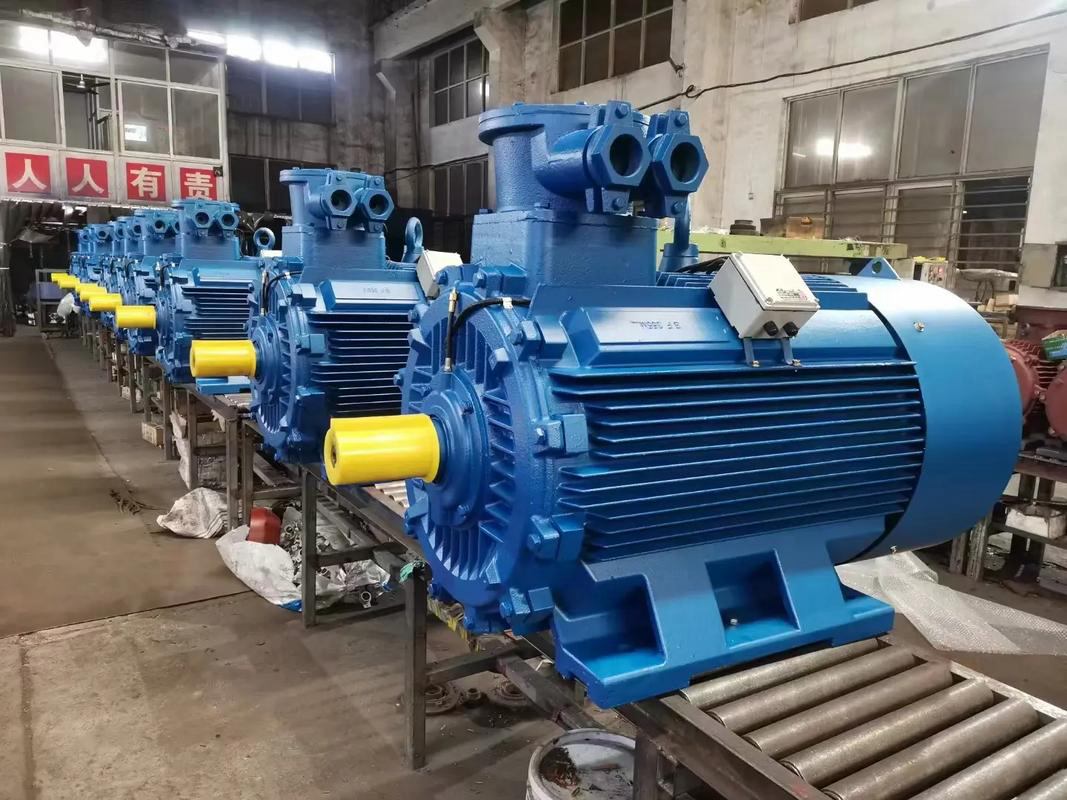
Explosion-Proof Motors
Safety-Critical Pump Environments
In hazardous environments, we rely on explosion-proof electric motors designed to prevent ignition of flammable gases or vapors. These motors comply with stringent international safety standards.
Industries Served
Oil and gas
Chemical processing
Refineries
Mining operations
Design Features
Reinforced enclosures
Sealed electrical components
Temperature-controlled surfaces
Submersible Pump Motors
Designed for Immersed Operation
Submersible motors are specifically engineered to operate underwater or in fluid-filled environments. They are hermetically sealed to prevent water ingress and provide reliable performance under high pressure.
Key Applications
Borewell pumps
Sewage and wastewater pumps
Deep well irrigation systems
Advantages
Efficient cooling by surrounding fluid
Compact and space-saving design
Quiet and vibration-free operation
Variable Frequency Drive (VFD) Compatible Motors
Optimizing Pump Performance
Modern pump systems increasingly rely on VFD-compatible motors to regulate speed based on real-time demand. These motors are designed to handle variable voltage and frequency without overheating or insulation failure.
Operational Benefits
Energy savings
Reduced mechanical stress
Extended pump and motor life
Precise flow and pressure control
Energy Efficiency Standards and Motor Selection
We prioritize motors that comply with IE2, IE3, and IE4 efficiency classifications, ensuring reduced energy consumption and lower operating costs. Selecting the right motor involves evaluating:
Load profile
Duty cycle
Environmental conditions
Speed control requirements
Total cost of ownership
Conclusion
The pump industry depends on a diverse range of electric motor technologies, each tailored to specific operational demands. From rugged AC induction motors to advanced permanent magnet and brushless DC motors, the right selection ensures optimal efficiency, reliability, and long-term performance. By aligning motor characteristics with pump requirements, we achieve superior fluid handling solutions that meet modern industrial, commercial, and environmental standards.