
English
Views: 0 Author: Site Editor Publish Time: 2025-05-26 Origin: Site


The United States is one of the world's largest markets for industrial electric motors. Motors are used every day in pumps, compressors, conveyors, HVAC systems, mining equipment, water treatment plants, food processing lines, machine tools, and automated manufacturing equipment.

For industrial buyers, however, choosing an electric motor manufacturer in the USA involves much more than comparing horsepower and price.
The correct supplier depends on several factors, including:
NEMA or IEC frame requirements
Motor horsepower or kW
Voltage and frequency
Efficiency requirements
General-purpose or severe-duty construction
VFD operation
Hazardous-location requirements
Application-specific certifications
Replacement dimensions
Availability and lead time
Some of the companies serving the U.S. motor market are American manufacturers, while others are global motor groups with significant U.S. manufacturing, distribution, engineering, or service operations.
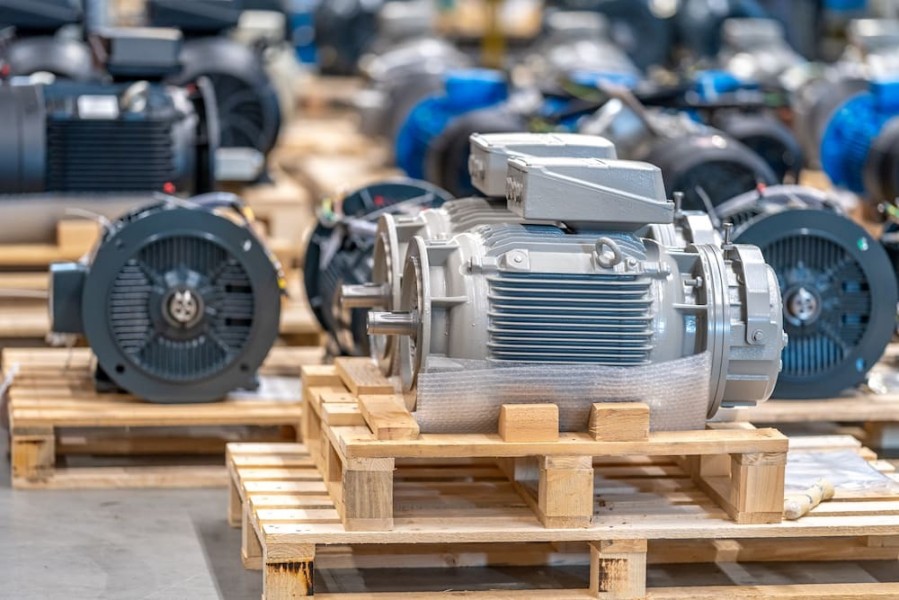
This guide introduces 10 leading electric motor manufacturers and suppliers serving the U.S. market and explains how OEMs, distributors, maintenance companies, and industrial users can choose the right motor supplier.
This list is not intended as a strict market-share ranking. Each manufacturer has different strengths depending on motor size, application, industry, and specification.
Before comparing brands, define the actual motor requirement.
For most industrial applications, buyers should confirm:
Motor power
Rated speed and number of poles
Voltage and frequency
NEMA or IEC frame
Mounting arrangement
Shaft dimensions
Efficiency level
Enclosure type
Service factor
Duty cycle
VFD requirements
Ambient conditions
For replacement motors, mechanical compatibility can be just as important as electrical performance.
A well-known brand is not automatically the best choice if the motor cannot fit the existing machine.
ABB Baldor-Reliance is one of the most recognized names in the North American industrial motor market.
ABB offers a broad NEMA motor portfolio covering general-purpose, severe-duty, washdown, hazardous-location, and application-specific motors. ABB states that Baldor-Reliance motors are manufactured at facilities in Arkansas, Georgia, Mississippi, and Oklahoma.
ABB is particularly strong in:
NEMA general-purpose motors
NEMA Premium efficiency
Severe-duty applications
Pumps and compressors
Conveyors
Food and beverage
Industrial replacement motors
Industrial users looking for established North American availability, extensive NEMA configurations, and a large distributor network.
Many industrial buyers still search for Siemens electric motors, but an important market change has occurred.
The motor and large-drive business formerly associated with Siemens now operates as Innomotics. Innomotics states that motors previously sold under Siemens brands such as SIMOTICS are now available under the Innomotics name. The company became independent from Siemens and was acquired by KPS Capital Partners in 2024.
Innomotics offers:
General-purpose induction motors
Severe-duty motors
VFD-compatible motors
IE3 and IE4 designs
Large drive systems
Medium- and high-voltage motors
Its severe-duty induction range covers industrial applications including pumps, compressors, conveyors, mixers, extruders, and cranes.
OEMs and industrial plants already familiar with the former Siemens motor platform or requiring sophisticated drive-system engineering.
WEG is headquartered in Brazil but has a major presence in the North American electric motor market.
Its W22 platform includes NEMA motor configurations ranging from standard high-efficiency designs to NEMA Premium and Super Premium efficiency motors. WEG documentation also covers NEMA MG-1, UL, CSA, and IEEE motor standards depending on the product configuration.
WEG is especially competitive in:
General-purpose motors
Severe-duty motors
High-efficiency motors
VFD applications
Mining and aggregate
Pumps, fans, and compressors
Industrial users wanting a broad global motor, drive, and automation product platform.
Toshiba International Corporation has an established industrial motor business in the United States.
Its EQP Global Severe Duty line is designed for demanding environments and includes heavy-duty construction, inverter-duty capability, multiple mounting options, and configurations for industrial environments exposed to dust, moisture, and vibration.
Toshiba also provides IEC motor options for customers working with internationally designed equipment.
Toshiba is particularly relevant for:
Severe-duty motors
Pumps
Water and wastewater
Mining and aggregate
HVAC
VFD applications
Facilities requiring robust industrial motors for continuous operation and demanding environments.
U.S. MOTORS is a long-established industrial motor brand within Nidec Motor Corporation.
Its product portfolio covers both general-purpose and specialized motors for applications such as water treatment, mining, power generation, agriculture, HVAC, compressors, and industrial machinery. Nidec states that the U.S. MOTORS portfolio ranges from fractional horsepower through large industrial ratings, with custom-engineered motors also available.
Products include:
NEMA Premium motors
General-purpose motors
Severe-duty motors
Vertical motors
HVAC motors
Custom-engineered motors
OEMs and MRO customers needing broad NEMA replacement coverage and application-specific
TECO-Westinghouse serves both standard industrial motor applications and much larger power requirements.
Its current product portfolio includes NEMA Premium general-purpose motors, severe-duty products, explosion-proof motors, washdown motors, medium-voltage motors, and engineered motors.
For example, the MAX-E1 NEMA Premium range covers approximately 3/4 HP through 800 HP, depending on configuration.
TECO-Westinghouse is strong in:
NEMA Premium motors
High-horsepower motors
Severe-duty applications
Oil and gas
Water treatment
Heavy manufacturing
Hazardous environments
Industrial users requiring standard NEMA motors as well as larger or application-specific motor solutions.
Franklin Electric occupies a more specialized position than many general-purpose motor manufacturers.
The company is particularly well known for motors used in groundwater, irrigation, municipal water, and submersible pumping systems.
Its current product range includes three-phase and single-phase submersible motors, high-temperature designs, and dual-voltage products.
Franklin Electric is particularly suitable for:
Deep-well pumps
Municipal water
Agriculture
Irrigation
Submersible applications
Customers whose motor requirement is closely linked to pumps and water systems rather than general industrial machinery.
Bodine Electric differs from the large industrial manufacturers above because it specializes mainly in smaller motors, gearmotors, and motion-control solutions.
The company manufactures AC, DC, and brushless DC motors and gearmotors, with much of its manufacturing based in Iowa. Bodine focuses heavily on OEM equipment such as packaging machinery, automation, laboratory equipment, food equipment, and material handling systems.
Fractional-horsepower motors
Gearmotors
AC and DC drives
Compact automation
Custom OEM applications
OEM machine manufacturers requiring compact motor or gearmotor solutions rather than standard large industrial NEMA motors.
Manufacturer |
Main Strength |
Typical Applications |
ABB Baldor-Reliance |
Broad NEMA range |
Pumps, conveyors, industry |
Innomotics |
Advanced industrial drives |
Process plants, OEM equipment |
WEG |
Efficiency + broad portfolio |
Pumps, fans, mining |
Nidec / U.S. MOTORS |
NEMA + replacement |
HVAC, water, industry |
Toshiba |
Severe duty |
Water, mining, HVAC |
TECO-Westinghouse |
Standard to high HP |
Heavy industry, oil & gas |
GE Vernova |
Medium/large motors |
Petrochemical, major processes |
WorldWide Electric |
NEMA + IEC |
OEM, MRO, conveyors |
Franklin Electric |
Submersible motors |
Water and irrigation |
Bodine Electric |
Small motors/gearmotors |
Automation, packaging |
The best manufacturer therefore depends heavily on the application.
One of the most important sourcing decisions is whether the equipment requires a NEMA motor or an IEC motor.
NEMA motors are widely used on machinery designed for the U.S. and Canadian markets.

Important characteristics can include:
NEMA frame sizes
NEMA shaft dimensions
Horsepower ratings
Service factor
NEMA torque design
60 Hz operation
IEC motors are common on machines imported from Europe, Asia, and other international markets.

Typical specifications include:
IEC frame sizes
kW ratings
B3, B5, or B35 mounting
Metric shafts
IE2, IE3, or IE4 efficiency
IP protection classes
A 10 HP NEMA motor and a 7.5 kW IEC motor may have similar power, but their:
Frame
Shaft
Foot dimensions
Flange
Center height
can be completely different.
For replacement projects, always compare the mechanical drawing.
A pump, conveyor, crusher, mixer, compressor, and HVAC fan place very different demands on the motor.
Confirm:
Starting torque
Continuous load
Shock load
Starts per hour
VFD operation
Environment
Common U.S. industrial systems include:
208V
230V
460V
480V
575V in some North American markets
60Hz
Imported equipment may instead contain IEC motors originally designed for 380V, 400V, or 415V at 50Hz.
Never assume voltage conversion alone guarantees equivalent performance.
Motor efficiency requirements in the United States depend on motor type, horsepower, construction, and applicable federal regulations.

Current U.S. Department of Energy rules specify minimum full-load efficiency levels for covered electric motors.
Therefore, do not select a replacement using only the efficiency label “IE3” or “NEMA Premium” without confirming that the actual motor falls within the applicable standard and rating.
If the motor will operate on a variable frequency drive, check:
Insulation system
Minimum speed
Constant-torque range
Bearing-current protection
Independent cooling if required
A standard motor may operate successfully on a VFD, but demanding low-speed or long-cable applications can require additional design considerations.
The lowest purchase price is not necessarily the lowest-cost motor.
Consider:
Energy consumption
Availability
Installation modifications
Spare parts
Lead time
Downtime
Expected service life
For an emergency replacement, a locally stocked motor may offer more value than a lower-priced motor requiring several weeks of delivery.
Not every U.S. project requires a U.S.-manufactured NEMA motor.
Many OEM machines imported into the United States already use IEC three-phase motors, particularly equipment manufactured in Europe or Asia.
In these cases, buyers may consider a qualified international manufacturer if the project does not require a specific U.S. brand or domestic-content requirement.
Victory Machinery Technology Co., Ltd. is an industrial motor and gearbox manufacturer focused primarily on IEC-based products.

Victory can provide:
Available customization can include:
230/460V 60Hz
220/440V 60Hz
440V 60Hz
480V 60Hz
50Hz configurations
Shaft and flange customization
PTC or PT100
Independent cooling
Custom nameplates
OEM branding

An IEC motor supplier may be particularly attractive when:
The existing machine already uses an IEC frame
Exact shaft and flange dimensions can be matched
OEM equipment is produced in batches
Custom voltage or frequency is required
The buyer wants a lower-cost alternative to a premium international brand
If a project specifically requires:
UL certification
A particular NEMA-listed configuration
Approved vendor brands
Buy American or other domestic-content requirements
those requirements should be confirmed before considering an imported replacement.

Victory's strength is therefore not being presented as a “U.S. Top 10 manufacturer,” but providing an alternative for suitable IEC motor, OEM, and replacement projects.
Major brands serving the market include ABB Baldor-Reliance, Innomotics, WEG, Nidec/U.S. MOTORS, Toshiba, TECO-Westinghouse, GE Vernova, WorldWide Electric, Franklin Electric, and other specialized manufacturers.
Many motors historically associated with Siemens, including SIMOTICS products, have moved to the Innomotics business and brand. Innomotics became independent from Siemens and was acquired by KPS in 2024.
ABB, Toshiba, WEG, TECO-Westinghouse, Nidec and other manufacturers all offer severe-duty solutions. The correct choice depends on horsepower, environment, enclosure, VFD requirements, and industry standards.
NEMA and IEC use different frame, mounting, dimensional and rating systems. A motor with similar power may not be mechanically interchangeable.
Sometimes. Electrical parameters, efficiency requirements, shaft, mounting, frame, voltage, frequency, duty, and required certifications must all be checked before replacement.
Provide the existing motor nameplate, overall motor photos, mounting dimensions, shaft dimensions, application, voltage, frequency, and any required certifications.
There is no single best electric motor manufacturer in the USA for every industrial application.
ABB Baldor-Reliance offers broad NEMA coverage, while Innomotics and WEG provide extensive global industrial platforms. Nidec/U.S. MOTORS, Toshiba, and TECO-Westinghouse are strong in standard and severe-duty applications. GE Vernova focuses more heavily on large engineered drives, while Franklin Electric and Bodine serve specialized market segments.
The correct supplier should be selected according to:
Motor power
Speed
Voltage
NEMA or IEC frame
Efficiency
Duty cycle
Application
Environment
VFD requirements
Certification
Mechanical dimensions
For machines already designed around IEC motors, OEMs and industrial buyers can also evaluate cost-effective international alternatives when the technical and regulatory requirements allow it.
A reliable motor supplier should not simply provide the same horsepower. It should help ensure that the motor matches the electrical performance, mechanical installation, operating environment, and actual driven equipment.


