You are here: Home » Blog » 10 Leading Helical Gear Motor Manufacturers: Brands, Products and Supplier Selection Guide
10 Leading Helical Gear Motor Manufacturers: Brands, Products and Supplier Selection Guide
Views: 0 Author: Site Editor Publish Time: 2026-08-11 Origin: Site
Helical gear motors are among the most widely used drive solutions in industrial machinery because they combine high transmission efficiency, smooth operation, compact construction, and a broad range of gear ratios. They are commonly found in conveyors, mixers, packaging machines, food processing lines, material handling systems, pumps, and automated equipment.
For OEM equipment builders and industrial buyers, however, selecting a helical gear motor manufacturer is not simply a matter of choosing the most famous brand. A suitable supplier must be able to match motor power, output speed, torque, mounting dimensions, duty cycle, environmental conditions, delivery requirements, and project budget.
Many global manufacturers offer reliable helical geared motor platforms, but their strengths differ. Some focus on highly modular systems and automation integration, while others specialize in heavy-duty applications, compact layouts, global service, or flexible customization.
This guide introduces 10 established helical gear motor manufacturers and, more importantly, explains how OEMs, distributors, and end users can compare suppliers for new equipment and replacement projects.
What Makes a Good Helical Gear Motor Manufacturer?
A helical gear motor combines an electric motor with a helical gearbox. Because the gear teeth are angled, engagement occurs progressively, helping provide smooth transmission, relatively low noise, and high mechanical efficiency.
A capable industrial gear motor supplier should provide more than a catalog model. Important capabilities include:
Multiple gearbox sizes and gear ratios
Adequate output torque and service factor options
Foot, flange, and other mounting configurations
High-efficiency electric motor options
Brake, VFD, and hazardous-area solutions where required
Technical drawings and selection data
Replacement and dimensional matching support
Reliable production and after-sales service
For OEM projects, customization, private labeling, documentation, and batch consistency may be just as important as the gearbox itself.
1. SEW-EURODRIVE
SEW-EURODRIVE is one of the most established names in industrial gearmotors. Its R-series helical gear units and gearmotors use a modular design with multiple sizes, ratios, motor combinations, and mounting arrangements. Current SEW documentation includes both single-stage and multi-stage helical gearmotor configurations.
Where SEW-EURODRIVE Is Strong
SEW is particularly suitable for manufacturers and industrial plants that value standardized global products, a broad modular drive platform, and integration with other drive and automation products.
Typical Applications
Typical applications include conveyors, logistics systems, production machinery, material handling equipment, and automated machines where extensive configuration choices are important.
2. Siemens
Siemens offers geared motor solutions through its SIMOGEAR family, covering helical, parallel-shaft, bevel-helical, and worm-based drive configurations. Siemens' product documentation positions these gearmotors as part of a coordinated drive and automation system.
Where Siemens Is Strong
Siemens can be particularly attractive for machine builders already using Siemens motors, variable frequency drives, PLCs, or automation equipment.
The ability to coordinate the mechanical transmission, electric motor, and drive control within one ecosystem can simplify larger engineering projects.
Typical Applications
Common applications include conveyors, mixers, material handling systems, logistics machinery, and automated production equipment.
3. Bonfiglioli
Bonfiglioli has an extensive industrial gearmotor portfolio. Its inline helical solutions include the AS Series and EVOX CP platform, while the F Series provides parallel-shaft helical solutions. Bonfiglioli emphasizes high efficiency, compact construction, and flexible mounting across these product families.
Where Bonfiglioli Is Strong
Bonfiglioli is suitable for OEMs that need multiple gearbox layouts from a common supplier, including inline, parallel-shaft, and right-angle configurations.
Typical Applications
Applications include conveyors, quarry and mining machinery, recycling equipment, logistics systems, material handling, and general industrial machinery.
4. NORD DRIVESYSTEMS
NORD manufactures several helical inline gear motor families, including UNICASE and NORDBLOC designs. Its product range supports foot mounting, flange mounting, and combined mounting configurations, with versions intended for demanding industrial environments.
Where NORD Is Strong
NORD focuses on complete drive systems combining gear units, electric motors, and drive electronics.
This can be useful for OEMs requiring a modular solution rather than sourcing the mechanical and electrical drive components separately.
Typical Applications
Typical applications include food processing, conveyors, logistics, packaging equipment, material handling, and industrial automation.
5. Sumitomo Drive Technologies
Sumitomo offers several industrial gearmotor designs using precision helical gearing and Cyclo technology. Its Helical Buddybox, for example, combines a helical gearbox with a Cyclo reducer input and is offered in shaft-mounted configurations.
Where Sumitomo Is Strong
Sumitomo is particularly relevant to users requiring robust shaft-mounted drives, high shock resistance, or gearmotors for demanding material handling applications.
Typical Applications
Applications include screw conveyors, bulk material handling, industrial conveyors, processing equipment, and machines exposed to fluctuating loads.
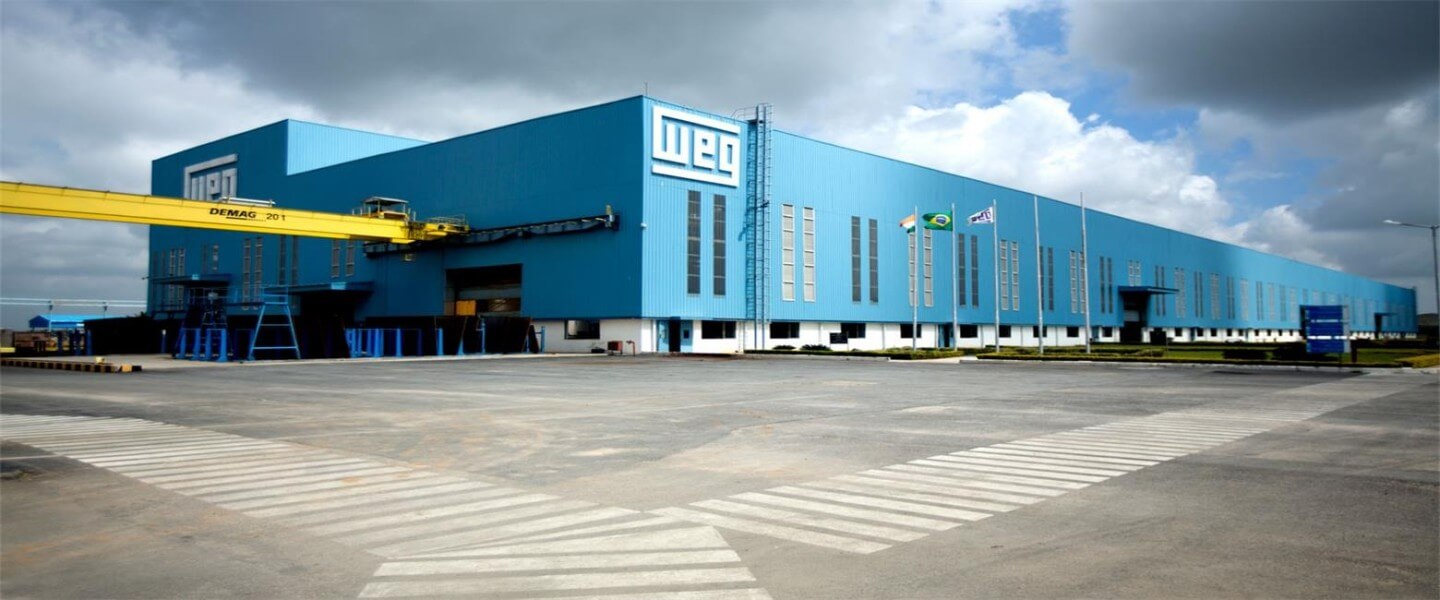
6. WEG
WEG supplies industrial helical geared motors through ranges such as WG20. Its helical gearboxes are available in multiple housing sizes and include both foot- and flange-mounted designs. WEG also supplies helical-bevel and helical-worm gearmotor configurations.
Where WEG Is Strong
WEG can be attractive when customers want to source electric motors, gearboxes, drives, and related electrical products within one manufacturing group.
Typical Applications
Typical applications include conveyors, material handling equipment, general machinery, processing equipment, and industrial production lines.
7. Flender
Flender has a strong position in heavy industrial power transmission. Its helical and bevel-helical portfolio includes a wide range of industrial gear units with horizontal, vertical, base-mounted, and shaft-mounted configurations.
Where Flender Is Strong
Flender is particularly relevant to heavy-duty applications where large output torque, robust construction, engineered accessories, and long operating life are priorities.
Typical Applications
Typical applications include mining conveyors, bucket elevators, cranes, cement production equipment, pulp and paper machinery, mixers, and other heavy process equipment.
8. Regal Rexnord
Regal Rexnord has a broad mechanical power transmission portfolio through brands such as Browning and Hub City. Current offerings include inline helical reducers, shaft-mounted helical gear reducers, helical-hypoid solutions, motors, and related power transmission products.
Where Regal Rexnord Is Strong
The company can be particularly relevant to North American OEMs and distributors that want access to gear reducers, motors, bearings, couplings, and associated mechanical power transmission components.
Typical Applications
Applications include conveyors, packaging machinery, food and beverage equipment, agriculture, material handling, and general industrial machinery.
9. Nidec Leroy-Somer
Nidec Leroy-Somer offers geared motors with axial, parallel, and right-angle outputs, including helical gearmotor designs. Its portfolio also includes brake motors and products for specialized industrial environments.
Where Nidec Leroy-Somer Is Strong
Nidec Leroy-Somer can be relevant where an established electric motor platform needs to be combined with different gearbox arrangements or specialized motor configurations.
Typical Applications
Potential applications include conveyors, industrial automation, process equipment, manufacturing machinery, and applications requiring brake or hazardous-area motor options.
10. Rossi
Rossi manufactures helical and bevel-helical gear reducers and gearmotors for both general industrial machinery and demanding applications. Its industrial portfolio emphasizes efficiency, reliability, flexible installation, and mechanical load capacity.
Where Rossi Is Strong
Rossi is particularly relevant to OEM equipment manufacturers and industrial users requiring traditional industrial gearbox engineering across a wide range of machine types.
Typical Applications
Typical applications include conveyors, mixers, extruders, processing machinery, material handling, and heavy industrial equipment.
Where Are Helical Gear Motors Commonly Used?
The popularity of the industrial helical gear motor comes from its ability to provide efficient speed reduction across many different types of machinery.
Conveyor Systems
Conveyors are one of the most common applications. Inline helical gear motors can drive belt and roller conveyors, while parallel-shaft and helical-bevel gear motors are useful where installation space or shaft direction requires a different layout.
The supplier should evaluate conveyor speed, pulley diameter, starting load, operating hours, and service factor rather than selecting the gearbox from motor power alone.
Mixers and Agitators
Mixers normally require relatively low speed and continuous output torque.
A gearmotor manufacturer should consider fluid viscosity, impeller size, starting conditions, shaft load, and daily operating hours.
Packaging and Automation Machinery
Packaging lines often require compact construction, smooth operation, and repeatable output speed.
Helical gear motors are commonly used for conveyors, filling equipment, labeling machines, transfer systems, and other automated machinery.
Bulk Material Handling
Mining, cement, grain, recycling, and aggregate applications can expose gearboxes to shock loads, dust, long operating hours, and loaded starting.
These applications generally require more attention to service factor, peak torque, bearing loads, sealing, and thermal capacity.
How to Compare Helical Gear Motor Manufacturers
Brand reputation is useful, but the correct technical match is more important.
Before choosing a helical gear motor supplier, compare the following factors.
Gear Ratio and Output Speed
The basic relationship is:
Output speed = Motor rated speed ÷ Gear ratio
For a 1450 rpm motor with a ratio of 25:1:
1450 ÷ 25 = 58 rpm
The output speed is approximately 58 rpm.
A good supplier should select the nearest appropriate standard ratio and confirm whether the resulting machine speed is acceptable.
Output Torque and Service Factor
Approximate output torque can be calculated as:
Output torque (Nm) = 9550 × Motor power (kW) × Gearbox efficiency ÷ Output speed (rpm)
Do not select an industrial gear motor from motor power alone.
Starting torque, shock loading, operating hours, and service factor also affect the required gearbox size.
Application Conditions Matter
A packaging conveyor operating eight hours per day does not create the same duty as a loaded mining conveyor, screw feeder, or mixer operating continuously.
A qualified manufacturer should understand the driven machine, not just the motor kW.
Mounting and Mechanical Interface
For new equipment or gearbox replacement, compare:
Foot or flange mounting
Output shaft diameter and length
Flange diameter and pilot
Mounting bolt dimensions
Center height
Hollow-shaft dimensions
Motor orientation
Terminal-box position
Gearbox mounting position
For replacement projects, matching the mechanical interface can be more important than purchasing the same original brand.
Motor Configuration
Depending on the application, the helical gear motor may require:
A manufacturer capable of matching both the motor and gearbox reduces the risk of compatibility problems.
Consider Total Cost, Not Only Gear Motor Price
Purchase price is only one part of the cost of an industrial drive.
Buyers should also consider efficiency, expected service life, availability of replacement parts, installation changes, maintenance requirements, delivery time, and downtime risk.
For example, a lower-priced gearmotor is not economical if its dimensions require major machine modifications. Conversely, paying for a premium global brand may not provide additional value when a standard industrial application can be served reliably by a properly engineered OEM alternative.
The best choice depends on the technical and commercial requirements of the project.
Premium Global Brand or Cost-Effective OEM Alternative?
Premium international brands can be the correct choice when a project specifies an approved vendor, requires worldwide service support, or is standardized around a particular automation ecosystem.
However, not every conveyor, mixer, feeder, or OEM machine requires a premium-brand cost structure.
For many projects, the actual requirements are:
Correct motor power
Correct output speed
Adequate output torque
Suitable service factor
Compatible mounting dimensions
Reliable bearings and gearing
Required motor efficiency
Appropriate IP protection
Technical drawings before production
In these situations, an experienced OEM gear motor manufacturer can provide a more cost-effective option, particularly for batch equipment production, private-label product lines, and replacement projects.
How Victory Supports Helical Gear Motor Projects
Victory Machinery Technology Co., Ltd. manufactures industrial electric motors, gearboxes, and gearmotors for OEM equipment builders, distributors, maintenance companies, and industrial users.
With 22 years of manufacturing experience, Victory can supply the electric motor and gearbox as a complete drive package rather than requiring customers to coordinate separate suppliers.
For customers specifically sourcing an inline helical gear motor, the R Series can be selected according to motor power, gear ratio, output speed, torque, mounting position, and application requirements.
When the original gear motor is unavailable, discontinued, has a long lead time, or exceeds the project budget, Victory can evaluate a compatible replacement.
Information Needed for Replacement
Provide:
Motor and gearbox nameplate photos
Motor power and rated speed
Gear ratio or required output speed
Output torque, if available
Mounting position
Shaft and flange dimensions
Overall installation photos
Application and operating hours
Where a standard Victory model can satisfy both the operating requirements and installation dimensions, a standard configuration is normally preferred to control cost and delivery time.
Customized shafts, flanges, or mounting dimensions can also be evaluated when direct replacement is required.
Support for OEMs and Distributors
Victory can support OEM equipment builders and industrial distributors with:
Technical model selection
Dimension drawings
Product datasheets
OEM and private-label nameplates
Custom paint and packaging
Sample orders
Batch production
Quality inspection
CE and ISO9001 documentation
18-month warranty
This approach is especially useful for machine manufacturers developing repeatable drive specifications and distributors building their own helical gear motor product lines.
FAQ About Helical Gear Motor Manufacturers
Who Are the Major Helical Gear Motor Manufacturers?
Established international manufacturers include SEW-EURODRIVE, Siemens, Bonfiglioli, NORD, Sumitomo, WEG, Flender, Regal Rexnord, Nidec Leroy-Somer, and Rossi.
The best supplier depends on the application, technical configuration, service requirements, delivery expectations, and budget.
What Should I Compare Between Helical Gear Motor Brands?
Compare gear ratio, output speed, rated torque, service factor, motor efficiency, mounting dimensions, motor configuration, technical documentation, delivery time, and after-sales support.
Is a More Expensive Helical Gear Motor Always Better?
No. Premium brands may offer extensive international service networks and automation integration, but a properly selected OEM gear motor can be more cost-effective for many standard industrial applications.
Can One Brand Replace Another Helical Gear Motor?
Yes.
The replacement must correctly match motor power, gear ratio, output speed, torque, service factor, mounting position, shaft or flange dimensions, voltage, frequency, and actual application duty.
Parallel-shaft helical gear motors and helical-bevel gear motors can be better where available installation space or shaft orientation requires a different mechanical layout.
What Information Should I Send to a Gear Motor Manufacturer?
For initial selection, provide the motor power and either the required gear ratio or output speed.
For final selection, also provide the application, load condition, mounting arrangement, dimensions, operating hours, voltage, frequency, and environmental conditions.
Conclusion
There is no single helical gear motor manufacturer that is best for every industrial project.
SEW-EURODRIVE, Siemens, Bonfiglioli, NORD, Sumitomo, WEG, Flender, Regal Rexnord, Nidec Leroy-Somer, and Rossi each address different technical, application, and sourcing priorities.
For industrial buyers, the more important question is whether the supplier can provide the correct gear ratio, output speed, torque, service factor, motor configuration, mounting dimensions, and technical support at an acceptable total cost.
Premium global brands remain valuable when worldwide service, approved-vendor requirements, or automation-system integration are priorities.
For OEM equipment production, private-label product lines, and replacement projects, a flexible manufacturer such as Victory provides another sourcing option through customized motors, dimensional matching, technical drawings, OEM branding, and complete motor-and-gearbox supply.
Ultimately, selecting the right helical gear motor manufacturer should begin with the application requirements—not simply the logo on the gearbox nameplate.